Summary
VOLTHAUL Energy builds and operates 30–50 MW battery energy storage systems (BESS) next to existing wind and PV farms in Hungary, using their grid connections. Recommendation: run this as a separate BESS company under the common VOLTHAUL Energy brand, with the Co-inwestor as equity partner, rather than inside VOLTHAUL EV Kft., the truck-charging company.
3-year goal: a portfolio of 3 storage assets (approx. 140 MW) under construction or in operation; first project next to the Ács/Kisigmánd wind farms. In the weak scenario (revenue €100k/MW) the project loses money, so we secure part of the revenue with a trader contract (floor or tolling).
Project description
VOLTHAUL Storage Kft. builds, finances and owns 30–50 MW / 60–100 MWh energy storage assets, placed next to operating wind and solar farms in Central Europe. The storage uses the farm's grid connection, bypassing the market's biggest bottleneck: the queue for new connections.
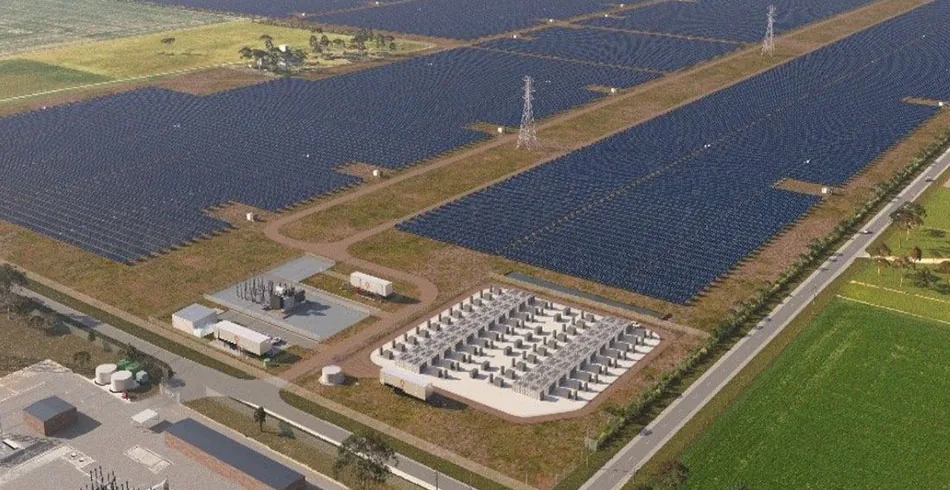
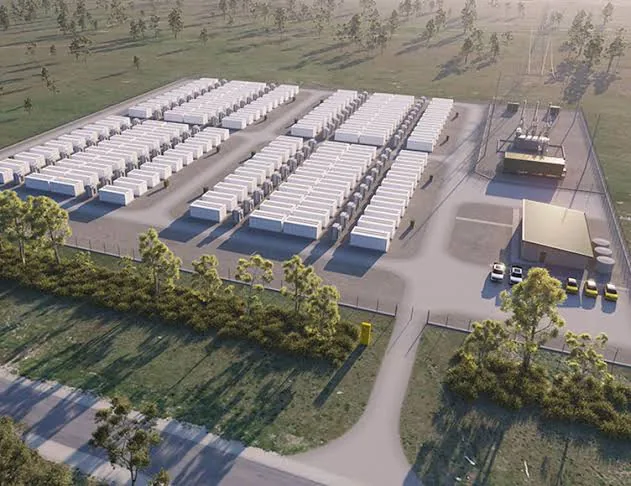
What the storage does: it charges when power is cheap or when the farm has a surplus, discharges during peak hours and stands ready to stabilise the grid for a fee from the operator (in Hungary, MAVIR).
Where: start in Hungary (the largest price spread in the EU), then Czechia, Slovakia and Poland. We are watching Austria — farm owners there build storage themselves.
Scale: 3 projects (approx. 140 MW) in the first 30 months, with a target portfolio of 300–500 MW in 5 countries.
Who the storage works for: the grid operator (balancing services), the energy market via a trader, the farm owner (less curtailment, higher selling price).
Who is behind it: the VOLTHAUL team (K Family Foundation, Rudolf Riedl, Dr. Orly Paran) as developer and the Co-inwestor as equity partner.
Step-by-step process
The whole process for one storage asset has 12 steps and takes approx. 30 months; steps 1–3 are done once for the whole company, steps 4–12 for each project.
| Step | What we do | Lead | Month | Result (contract from the list of 10) |
|---|---|---|---|---|
| 1 | We set up VOLTHAUL Energy (founders) and VOLTHAUL Storage Kft. (with the Co-inwestor) | Andrzej + lawyer | 0–2 | Shareholders' agreement (1) |
| 2 | The partners fund the development phase 90/10 (approx. €2.25m in total) | Co-inwestor | 1–2 | Shareholders' agreement (1) |
| 3 | Agreement with an advisor for Hungary/Slovakia/Czechia | Andrzej | 1–2 | Advisory agreement (2) |
| 4 | Farm selection, first conversations, NDA and LOI | Levente Magyar, Rudolf, Andrzej | 1–4 | LOI with the farm |
| 5 | Agreement with the farm: land + shared grid connection | Andrzej + lawyer | 3–6 | Farm agreement (3) |
| 6 | Grid operator consent for storage at the connection point | grid designer | 4–12 | Grid agreement (4) |
| 7 | Design, building permit, fire safety, MEKH licence | architect / Orly (coordination) | 7–15 | Permits |
| 8 | Trader agreement: floor or tolling | Andrzej + optimiser (Rudolf Riedl) | 10–15 | Trading agreement (5) |
| 9 | Tender and contract with the contractor and battery supplier | Andrzej + Rudolf Riedl + contract engineer | 11–16 | EPC contract (6), service (7) |
| 10 | Financial close: loan + partners' equity (90/10), insurance | Co-investor + Rudolf Riedl | 12–17 | Loan (8), insurance (9) |
| 11 | Construction and commissioning, MAVIR prequalification | contractor + trader | 17–29 | Acceptance, prequalification |
| 12 | Commercial operation, reporting, decision: hold or sell a stake | VOLTHAUL Storage Kft. board | from 30 | Asset management agreement (10) |
Decision points ("gates"): after step 5 — has the farm signed; after step 6 — has the grid operator agreed to charging from the grid; after step 8 — is the guaranteed minimum enough for the bank. A negative answer = exit from the project at low cost (up to approx. €0.3m).
Business proposal and structure
VOLTHAUL Storage Kft. is a partnership JV: the founders (through VOLTHAUL Energy) and the Co-inwestor contribute capital pro rata — 10% and 90% — and the founders additionally receive a development fee for their work and a carry: 20% of the Co-inwestor's profit above 8% per year. The percentages are a proposal for negotiation.
What each side contributes and receives
| Founders (VOLTHAUL Energy) | Co-inwestor | |
|---|---|---|
| Capital | 10% of equity: approx. €1.2m per storage asset at start + approx. €0.2m in year 10; partly covered by the contributed development fee | 90% of equity: approx. €10.4m per storage asset at start + approx. €2.1m in year 10 |
| Development phase | 10% of the budget (approx. €75k per project) | 90% of the budget (approx. €675k per project), in tranches tied to milestones |
| Work | Development, farms, transactions, day-to-day management | Construction oversight, bank relations |
| Compensation for work | Development fee of 2–3% of capex: half at financial close, half at commissioning | — |
| Profit share | 10% + carry | 90% minus carry |
| Governance | Board 2+2; budget, loan, sale and a new partner require the consent of both sides | as above |
How we split the cash (waterfall with carry)
- All cash is split 90/10 until both sides recover their contribution plus 8% per year (the "hurdle").
- Surplus above the hurdle: 20% of the Co-inwestor's share goes to the founders as carry. Of every €100 of surplus, the founders get €28 (€10 share + €18 carry), the Co-inwestor €72.
Example: the storage asset distributes €3m in a year. Before the hurdle: the Co-inwestor €2.7m, founders €0.3m. After the hurdle: the Co-inwestor €2.16m, founders €0.84m. Carry only arises when the project earns more than 8% per year.
Result for one 50 MW storage asset (base case, 15 years, excluding development fee):
| Founders' equity share | Founders' contribution | Founders' profit | Founders' rate of return | Co-inwestor's rate of return |
|---|---|---|---|---|
| 5% | approx. €0.7m | approx. €3.4m | approx. 24% | approx. 14% |
| 10% (proposal) | approx. €1.4m | approx. €4.1m | approx. 21% | approx. 14% |
| 15% | approx. €2.1m | approx. €4.9m | approx. 19% | approx. 14% |
Portfolio of 3 storage assets at 10%: founders' contribution approx. €3.9m, of which approx. €2m can be covered by the contributed development fee; profit approx. €11.5m over 15 years, plus development fees of €1.6–2.4m.
To be agreed in the shareholders' agreement:
- Carry calculated for each storage asset separately (our proposal) or for the whole portfolio (a portfolio-level alternative).
- Catch-up: not in the model — we can waive it in exchange for per-asset carry.
- Clawback: only with portfolio-level carry.
- Pro rata additional contributions; no dilution without the consent of both sides.
- The Co-inwestor's right of first refusal on further BESS projects; founders' right to exit together with the Co-inwestor (tag-along).
Truck-charging hubs remain 100% with the founders (VOLTHAUL EV Kft.). The Co-inwestor has no stake in them, and VOLTHAUL Storage Kft. may supply batteries to the hubs on market terms.
Levente Magyar — advisory agreement with success-based fees (signed farm agreement, financial close); any equity only from the founders' pool, e.g. 5% of VOLTHAUL Energy. Before signing, check Hungarian rules for former public officials.
Partners
Each partner is responsible for one thing without which the project will not start: land with a grid connection, capital, local relationships or transactions.
| Partner | Who they are | Role in VOLTHAUL Storage Kft. |
|---|---|---|
| K Family Foundation | Family foundation, 55% of VOLTHAUL Energy; represented by Andrzej Krauze (architect, Business Development and Transactions at KRAM Development) | Leading development and transactions: farm agreements, contractors, bank, project sales |
| Rudolf Riedl | Managing Director SÜBA Hungary; responsible for the VOLTHAUL process in Hungary | Hungarian market: contacts with farm owners and contractors, local project oversight |
| Dr. Orly Paran, Adv. (Isr.) | Attorney (Israel), business development advisor based in Budapest | Negotiations with partners, documentation, coordination of permits and agreements |
| Co-inwestor | International investor and commercial real estate developer active in Poland (name disclosed after signing an NDA) | Equity partner: 90% of equity, construction oversight, bank relations |
| Levente Magyar (proposed) | Advisor with contacts in government and business in Hungary, Slovakia and Czechia | Opening doors: farm owners, grid operators, institutions; success-based fee |
To be confirmed: the scope of work and time commitment of Rudolf and Orly, as this determines whether they should share in the performance premium or only in the founders' 20%.
Market: why Hungary
Hungary has the highest average daily power price spread in the EU and a grid that more often has a surplus than a shortage of energy — exactly what storage earns on.
- Price spread: on average €160.58/MWh per day, the highest in the EU (ESS News, 07.2026).
- Grid surplus: for seven months from March 2024, downward balancing was needed in 80% of quarter-hours (Montel); that is when storage charges.
- Services for MAVIR: aFRR reserve indicatively €100–180/MW per day, i.e. approx. €36–66k/MW per year (ebattery.energy, industry source).
- Competition: the main players are MVM, Greenvolt, ALTEO, MOL and MET; the largest storage asset, Buj (100 MW / 288 MWh), has been operating since 2026.
- Barrier to entry: new grid connections are allocated through MEKH tenders; in the 2026 tender, from 30.09.2030 at the earliest. Hence our model: storage next to a farm with an existing connection.
Saturation risk: with every new storage asset, service prices and spreads fall. The model assumes revenues decline by 5% per year for 5 years; in Sweden, 2h storage revenues fell by 20% in July 2026 after FCR and mFRR prices dropped by 30% (ESS News).
Business model
VOLTHAUL Storage Kft. develops storage projects next to farms, builds and holds some, and sells others at the ready-to-build (RTB) stage to fund further development.
Where storage revenue comes from
- Price arbitrage: charging in cheap hours (midday, night, negative prices), selling at peak — HUPX exchange, day-ahead and intraday markets.
- Services for MAVIR: availability fee (FCR, aFRR, mFRR) plus payment for energy when activated.
- Energy from the farm: absorbing surpluses the farm would otherwise have to curtail.
Two paths for each project
| Build and hold | Sale at RTB | |
|---|---|---|
| Capital per project | approx. €11.6m of equity | approx. €0.75m of development costs |
| Profit | EBITDA approx. €5.9m/year; value approx. €21m at commissioning | €1.4–6.6m one-off (50 MW) |
| Time to cash | from approx. month 30 | approx. 18–24 months |
| Power price risk | on our side | passes to the buyer |
RTB prices: USD 50–170k/MW in European transactions (Voice of Renewables / Enerdatics, 09.2026).
Cooperation with the farm (base option: lease + connection fee)
- Land: approx. 0.85 ha for 50 MW / 100 MWh, approx. €17k per year.
- Connection-sharing fee: approx. €10k/MW per year, i.e. approx. €500k.
- Alternatives: farm share in revenue (e.g. 12%) or a joint SPV (the farm contributes the connection for approx. 25%).
- Argument for the farm: a higher average selling price for its energy and steady income.
Trading: an external optimiser or trader, with a guaranteed minimum (floor) or a fixed fee (tolling) for part of the capacity — this raises the possible loan from 50–60% to 70–80% of capex.
Farms in 5 countries
The best targets are Hungary (wind farms without a tariff, independent PV owners) and Poland (large PV farms, legal connection sharing — cable pooling). In Czechia and Slovakia farms are small, so standalone storage will work better there; Austria is taken by farm owners.
| Priority | Country | Farm | Type, capacity | Owner | Storage on site | Notes |
|---|---|---|---|---|---|---|
| A | Hungary | Ács + Kisigmánd | wind, approx. 124 MW | Premier Energy + iG TECH (since 01.2026) | no information | Tariff expired, merchant sales — storage increases revenue |
| A | Hungary | Ikervár | wind, 34 MW | Premier Energy + iG TECH | no information | Tariff ends approx. 2026–2027 |
| A | Hungary | Lumen Park Szolnok | PV, 138 MW | SolServices Kft. | no information | Independent developer, close to a MAVIR substation |
| A | Hungary | Lumen Park Szászberek | PV, 68 MW | SolServices Kft. | no information | Package with Szolnok |
| A | Poland | Zwartowo | PV, 204 MWp (target 290) | Goldbeck Solar Investments (majority), Respect Energy | owner plans cable pooling | Largest PV farm in Poland |
| A | Poland | Witnica | PV, 64.6 MW | Alternus Energy Group (some sources say BayWa r.e. — to be confirmed) | no information | Independent owner |
| B | Poland | Brudzew | PV, 70 MW | ZE PAK | no information | Former mining site |
| B | Poland | Wielbark | PV, 62 MW | to be determined | no information | Warmian-Masurian region |
| C | Poland | Przykona | PV, 200 MW | EDPR | no information | Major utility — usually builds itself |
| B | Hungary | Inárcs | PV, 132 MW | Shanghai Electric Power | no information | 25-year MAVIR tariff may be a constraint |
| C | Hungary | Kaposvár | PV, 100 MW | MVM Zöld Generáció | no information | MVM builds storage itself |
| C | Hungary | Mezőcsát | PV, 250 MW | MOL (Polsolar Kft.) | no information | KÁT until 2048, MOL builds itself |
| C | Czechia | Ralsko | PV, 38 MW | ČEZ | no information | Major utility, 2010 tariff |
| — | Czechia | Vepřek | PV, 35 MW | FVE Czech Novum (Decci) | YES, planned | Rejected |
| — | Austria | Nickelsdorf (hybrid) | PV + wind, 164 MW | Burgenland Energie, PÜSPÖK, ImWind | YES, several | Rejected |
| C | Slovakia | Jaslovské Bohunice | PV (planned), 48 MW | JESS | no information | Farm status to be checked |
Czechia and Slovakia: since October 2025 standalone storage can be connected to the grid in Czechia, so there we are looking for plots next to grid substations rather than farms. We will test the same model in Slovakia.
Poland: a separate market with a capacity market (additional revenue for availability), but also strong competition among storage assets; we start with talks with Goldbeck/Respect and the owner of the Witnica farm.
Contractors
Recommendation: Electrum as the main turnkey contractor, Onde with a separate battery supplier as a comparison bid, and in Hungary a local subcontractor for electrical and grid connection works.
| Company | Country | What they do | Track record | Notes |
|---|---|---|---|---|
| Electrum | Poland (Białystok) | Full scope: design, battery supply, construction, HV connection, 5-year service, control system | Storage 80 MW / 320 MWh (Lwówek Śląski) and 133 MW (Trzebinia, with Fluence); PV farms 250 and 225 MWp, wind 219 and 106 MW | Ask about work in Hungary |
| Onde (Erbud group) | Poland | Design and construction works; batteries purchased separately | Storage 300 MW / 1200 MWh for R.Power (approx. PLN 117.8m net, 2026–2027) | Acquiring Olmex — substations and transmission lines |
| Eko Prime | Poland | Industrial storage | More than 20 MW commissioned | For smaller storage assets |
| Forest-Vill | Hungary | Energy contractor | MAVIR storage 20 MW / 60 MWh in Szolnok; MET storage in Százhalombatta | Natural local partner |
| Extor Elektronika | Hungary | Energy contractor | MVM storage in Litér | Local alternative |
| Greenbuddies | Czechia | Turnkey PV + storage | Projects in 18 EU countries, more than 1000 MW PV; Modlany (PV 41.8 MW + storage 35 MW / 42 MWh) | For projects in Czechia and Slovakia |
| GOLDBECK SOLAR | Germany / Poland / Austria | PV farms, EPC | Zwartowo, Nickelsdorf | Possibly at farms it built |
Battery and system suppliers: Sungrow, CATL, BYD, Huawei, Tesla (Megapack), Fluence, Wärtsilä; lower-cost: REPT Battero + Kehua.
Terms we require from the contractor: fixed price, delay penalties, availability of at least 97%, 10–15-year capacity warranty, 10% bank guarantee.
Banks: who will finance construction in Hungary and Czechia
Banks are keen to finance storage, but only with secured revenues and a strong investor; storage next to a farm and a trader contract (floor or tolling) is exactly what they are looking for.
| Bank | Country | Storage experience | Notes for us |
|---|---|---|---|
| UniCredit Bank Hungary | Hungary | €58.9m loan over more than 10 years for the Buj storage asset 99 MW / 288 MWh (Greenvolt) | Buj had a 10-year state contract (CfD) — the bank financed secured revenue; we need tolling or a floor |
| EBRD | Hungary (region) | €70m in a €210m package with commercial banks for Renalfa IPP: 450 MW PV + 250 MW / 1 GWh of storage | One of the first project financings for a PV + storage hybrid in the region; fits a portfolio of 3 projects |
| EIB + Erste Bank | Austria (region) | €57m for PÜSPÖK: wind + PV + storage hybrid in Nickelsdorf | A "super-hybrid" model like ours; EIB takes the risk, Erste as domestic bank |
| Kommunalkredit Austria | CEE region | Storage financing in Romania | Energy infrastructure specialist |
| OTP, MBH, K&H, Erste Hungary, Raiffeisen Hungary | Hungary | no public storage transactions found | To approach as second bank or local bank |
| Komerční banka (Société Générale) | Czechia | Finances storage, but the limit is oversubscribed many times | Selective on standalone storage, more willing with storage attached to a PV farm |
| UniCredit Bank CZ | Czechia | Similar approach to KB | Prefers storage with a generation source |
| Moneta Money Bank | Czechia | Only for established, strong companies | Probably not for a new SPV |
| ČSOB (KBC), Česká spořitelna (Erste), Raiffeisenbank | Czechia | no public storage transactions found | Partners of the NRB state guarantee programme "Národní záruka" (since 12.2025) |
What this means:
- A loan for "merchant" storage without guaranteed revenues is increasingly difficult; in Germany, financing terms for such projects worsened in 2026.
- Our advantage with banks: storage next to a farm (preferred by Czech banks), a floor/tolling contract for part of the capacity, a financially strong Co-inwestor as partner, fixed price and contractor guarantees.
- Plan: one lead bank (UniCredit HU or EBRD for the whole portfolio) + a local bank; in Czechia KB or UniCredit CZ only for a project with a PV farm.
Offtakers
The storage asset has three payers during operation and one group of buyers when we sell a project.
| Offtaker | What they pay for | How | Examples |
|---|---|---|---|
| Trader / optimiser | Access to the storage capacity and exchange trading | Floor (guaranteed minimum + surplus sharing) or tolling (fixed fee per MW for 5–10 years) | enspired, MET Group, ALTEO, MVM; in other countries Axpo, Statkraft |
| Grid operator | Readiness to stabilise the grid and energy when activated | Daily FCR, aFRR, mFRR auctions (via the trader) | MAVIR (HU), PSE (PL), ČEPS (CZ), SEPS (SK) |
| Energy market | Price difference: buy cheap, sell high | Day-ahead and intraday exchange (via the trader) | HUPX (HU), TGE (PL), OTE (CZ) |
| Farm owner | Indirectly: sells us surpluses and gets a higher price | Power purchase agreement with the farm | Premier Energy, SolServices, Goldbeck/Respect |
| Project buyers (on sale) | A ready-to-build (RTB) project or shares in an operating storage asset | USD 50–170k per MW at RTB; payment in tranches | Engie, Northland Power, Toki Power (Renalfa), MetaWealth; in Hungary MVM, Greenvolt, ALTEO, MOL, MET; infrastructure funds |
In practice we sign the trading agreement with only one trader; they handle the exchange and the grid operator on our behalf.
10 contracts to sign
Ten contracts close the whole process; contracts 1–2 are signed once, 3–10 for each storage asset. The numbers correspond to the "Result" column in the step-by-step process.
| # | Contract | With whom | Step | Key terms | We do not sign if… |
|---|---|---|---|---|---|
| 1 | VOLTHAUL Storage Kft. shareholders' agreement | Co-inwestor (+ VOLTHAUL Energy) | 1–2 | Equity 90/10, 8% hurdle, 20% carry (per asset), 2–3% development fee, contribution schedule for both sides, board 2+2, tag-along | no documented Co-inwestor funds |
| 2 | Advisory agreement | Levente Magyar (and possibly other local advisors) | 1–2 | Success-based fee, confidentiality, compliance with rules for former public officials | cooling-off rules do not allow it |
| 3 | Land lease + connection sharing | Farm owner | 5 | Min. 25 years; right of assignment to the bank; priority rules at full capacity; right to charge from the grid; condition of operator consent | the farm can terminate without compensation |
| 4 | Connection agreement / amendment + grid use | Grid operator (MAVIR / local) | 6 | Import and export of energy; reinforcement cost stated as an amount; connection date | reinforcement cost without a cap |
| 5 | Trading agreement (floor or tolling) | Trader / optimiser | 8 | Guaranteed minimum for 7–10 years; fee ≤ 8–10%; cycle limit consistent with the battery warranty; liability for imbalances | no minimum with a loan > 60% |
| 6 | Turnkey EPC contract + battery warranties | Contractor (Electrum / Onde) + supplier | 9 | Fixed price; delay penalties; availability ≥ 97%; 10–15-year capacity warranty; 10% bank guarantee | no bank guarantee |
| 7 | O&M service + long-term service agreement (LTSA) | Contractor or manufacturer | 9 | Response time ≤ 24 h; unavailability penalties; augmentation module price fixed upfront | no penalties |
| 8 | Loan agreement + security + direct agreements | Bank (UniCredit HU, Kommunalkredit) | 10 | 50–80% of capex; ≥ 10 years; DSCR 1.20–1.35x; non-recourse to shareholders | personal guarantees required |
| 9 | Construction insurance, then property and loss of revenue | Insurer via a broker | 10 | Battery fire coverage; loss of revenue min. 12 months | battery fire excluded |
| 10 | Asset management agreement | VOLTHAUL Energy ↔ storage SPV | 12 | Management fee, monthly reports, oversight of the trader and service | — |
In addition: the MEKH licence (or its equivalent in a given country) and the building permit — these are administrative decisions, not contracts.
Finance
At the start, approx. €2.25m of risk capital is needed to develop three projects; building the whole portfolio costs approx. €81m, of which approx. €32m is equity.
| Item | One storage asset (50 MW) | Portfolio of 3 projects (approx. 140 MW) |
|---|---|---|
| Development to RTB (risk capital) | approx. €0.75m | approx. €2.25m |
| Total capex | approx. €28.9m | approx. €81m |
| Bank loan (60%) | approx. €17.3m | approx. €49m |
| Equity (40%) | approx. €11.6m | approx. €32m |
| EBITDA in year 1 | approx. €5.9m | approx. €16.5m |
Scenarios (one storage asset):
| Scenario | Year 1 revenue | Equity IRR | Payback |
|---|---|---|---|
| Weak | €100k/MW | negative | none within 15 years |
| Base | €160k/MW | approx. 16% | approx. 5 years |
| Strong | €220k/MW | approx. 84% | approx. 2 years |
How to finance it:
- Development phase (€2.25m): the partners pro rata 90/10, in tranches tied to milestones (start, farm agreement, grid operator consent).
- Construction: equity from the company + non-recourse loan for each SPV (UniCredit Bank Hungary, EBRD, Kommunalkredit). A tolling agreement for part of the capacity can raise the loan to 70–80%.
- Capital recycling: sale of project 3 at RTB (approx. €3–4m) or 49% of the shares in an operating storage asset after commissioning.
Financial model
One 50 MW / 100 MWh storage asset pays back its equity in approx. 5 years and over 15 years returns approx. €28.7m of cash to shareholders on €11.6m of equity.
Key assumptions (base case): capex €260/kWh, revenue €160k/MW in year 1 declining by 5% per year for 5 years, battery degradation 2% per year, availability 97%, trader fee 8%, service 1.5% of capex per year, farm fee €10k/MW, loan 60% at 7% over 10 years, CIT 9%.
Profit split: the model assumes a partnership JV — equity 90/10, an 8% annual hurdle and a 20% carry for the founders (details and results table in the "Business proposal and structure" section). At a 10% stake, the founders get approx. 21% rate of return, the Co-inwestor approx. 14% — both sides risk their own money, and the founders earn more only when the project exceeds 8% per year.
Timeline
With a start in October 2026, the first storage asset begins operation around March 2029; the longest pre-construction stage is grid operator consent.
Projects 2 and 3 start 3–6 months later; the "hold or sell at RTB" decision is made for each around month 15.
Risks
The biggest risk is a decline in market revenues before we repay the loan; the second is grid operator consent for storage next to a farm.
| Risk | Impact | How we mitigate it |
|---|---|---|
| Market saturation, falling service prices and spreads | Weak scenario = loss | Floor or tolling for part of the capacity; selling some projects at RTB |
| Grid operator does not allow charging from the grid | Significantly lower revenues | Condition precedent in the farm agreement; optimiser involved in the project from the start |
| Farm tariff (KÁT/METÁR) conflicts with storage | Project impossible or more expensive | Priority for farms without a tariff (Ács, Kisigmánd); legal opinion before LOI |
| Rising battery costs | Lower rate of return | Fixed price in the contractor agreement; 5% contingency |
| Battery fire or failure | Downtime, costs | Certified equipment, property and loss-of-revenue insurance |
| Equity partner fails to contribute | Construction halted | Contribution schedule in the shareholders' agreement; verification of the Co-inwestor's liquidity before signing |
| Regulatory changes (MEKH, MAVIR, PICASSO/MARI from autumn 2026) | Change in revenue structure | Flexible trader agreement; right to change the optimiser |
Next steps
First decisions on structure and partners, then first contact with farms and requests for quotation — all within 8 weeks.
- Decision: a separate company VOLTHAUL Storage Kft. and the shareholding split (K Foundation, Co-inwestor, possibly Levente Magyar).
- Presenting to Orly and Rudolf the VOLTHAUL Energy → VOLTHAUL Storage Kft. structure and the scope of their work.
- Talks with the Co-inwestor on funding the development phase (approx. €2.25m), agreeing the 90/10 partnership JV with a 20% carry above 8% per year, liquidity verification.
- Advisory agreement with Levente Magyar, after checking Hungarian rules for former public officials.
- First contact with Premier Energy / iG TECH (Ács, Kisigmánd, Ikervár) and SolServices (Szolnok, Szászberek); in Poland with Goldbeck Solar / Respect Energy.
- Requests for quotation to traders (enspired, MET, ALTEO, MVM) and contractors (Electrum, Onde).
- Opinion of a Hungarian lawyer: MEKH licence, connection sharing, impact of farm tariffs.
- Updating the financial model with real quotes.